
This post is sponsored by Pleasant Hill Grain, who sent me this dough sheeter to review. All opinions are my own.
If you love making croissants, Danish pastries, puff pastry, pie dough, or other laminated doughs, then you already know one thing: rolling dough by hand is a workout. A very buttery workout.
I was recently sent a Japan Kneader dough sheeter to try by Pleasant Hill Grain, and as someone who loves all things pastry and appreciates tools that make baking more efficient, I was really excited to put it to the test!
In this post, I'm sharing my honest thoughts on the Japan Kneader dough sheeter, what it is designed to do, who it's best for, and whether I think a dough sheeter is actually worth having for home baking and pastry work.
What Is a Dough Sheeter?
A dough sheeter is a tool that rolls dough to a consistent thickness much more quickly and evenly than doing it by hand with a rolling pin.

It's especially helpful for:
- Croissants
- Danish pastry
- Puff pastry
- Pie crust
- Tart dough
- Cookies
- Flatbreads
- Pizza dough
- Baklava
If you make laminated dough regularly, consistency matters so much. A dough sheeter helps create more even layers, saves time, and takes a lot of the physical effort out of the process.
About the Japan Kneader Dough Sheeter
Japan Kneader's dough sheeters are manual countertop sheeters made in Japan, and the brand highlights their compact, foldable design and focus on durability and simplicity. Their current lineup includes the RS101 (12-inch) , RS201 (15.5-inch) , and the RS301 (21.6-inch). With the RS101 positioned for smaller home baking batches, the RS201 as a step up in capacity, and the RS301 for larger-scale professional use.
One thing that stands out right away is that these are manual dough sheeters, not bulky electric machines. Japan Kneader says that approach was intentional, with a focus on practicality, compact storage, and reliable operation.
That makes this style of sheeter especially appealing if you want something more serious than a rolling pin but don't have the space for large commercial pastry machine.

What Can You Make With It?
According to the brand, this dough sheeter can be used for a wide range of doughs, including croissants, Danish pastries, puff pastry, pie crusts, tart shells, cookies, flatbreads, baklava, and pizza. Basically any pastry or dough projects where even thickness and repeatable results matter.
That versatility is a big plus because it means it's not just a one-purpose tool. If you bake often, especially from scratch, it can potentially earn its counter space.
My First Impressions
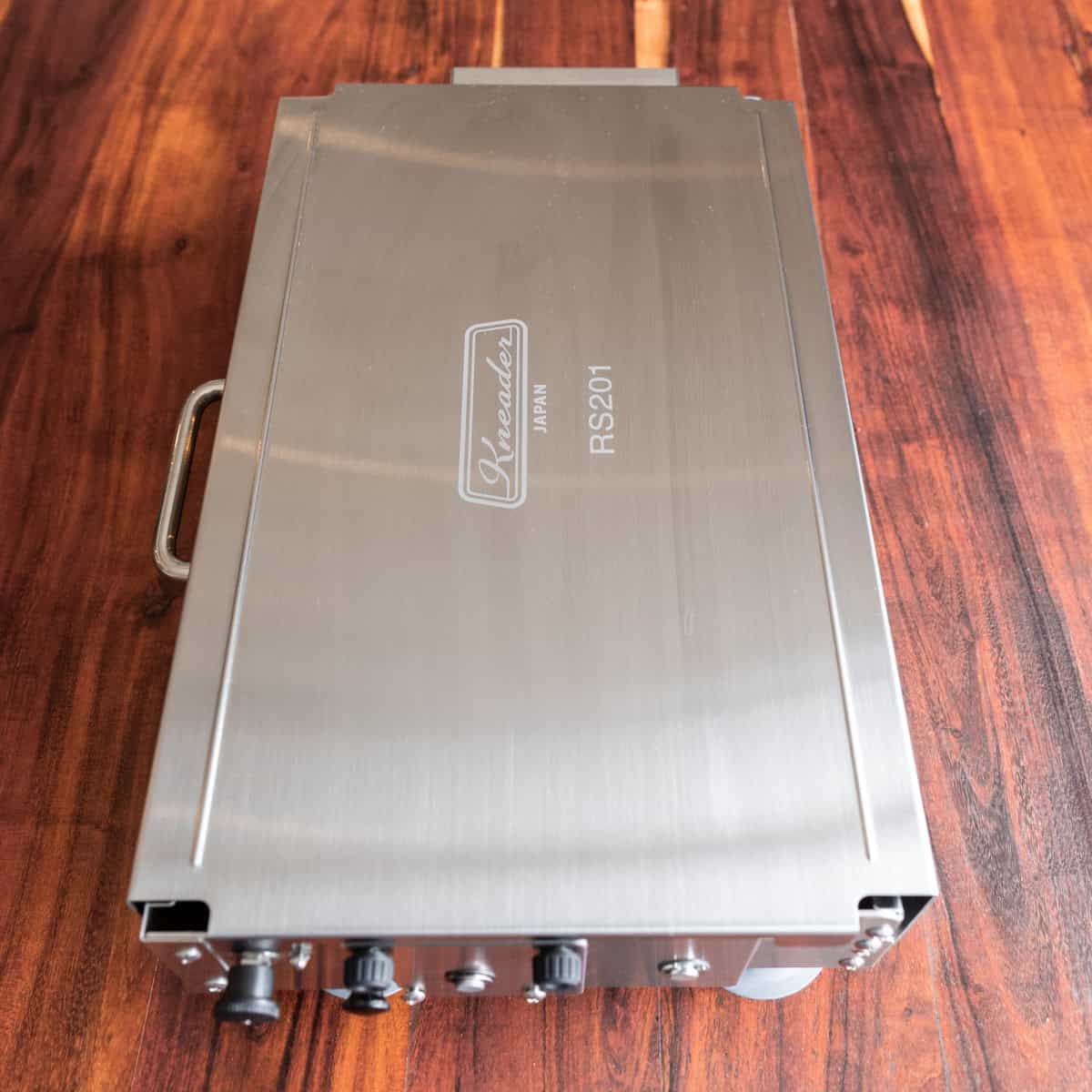
I received the RS201 15.5-inch dough kneader. When I opened the box I was surprised by the size. I knew it was meant to be rather compact but I was pleasantly surprised by just how compact it was. I will say that while the actual machine folds down to about the size of a brief case, the board does not fold down and is rather long (39 inches). However, it is pretty thin and easily fit behind some shelves in my own kitchen.
This machine feels thoughtfully designed. It has a more compact footprint than many traditional dough sheeters, which is a huge plus if you're working in a home kitchen and not a full bakery space, as I am.
The case is made of stainless steel, so it has a very sleek look to it. Every aspect of the design shows obvious consideration. The feet of the kneader are equipped with suction cups, so you don't have to worry about it moving. Each piece seamlessy folds into one another for easy set up and tear down.
The sheeters are made in Japan as opposed to China like most other brands. Japanese manufacturing is among the best in the world and is superior in almost every way to Chinese manufacturing. Japan Kneader stands by the quality of their dough sheeter so much so that they offer a 5-year warranty, whereas most other brands offer a 1-year warranty.

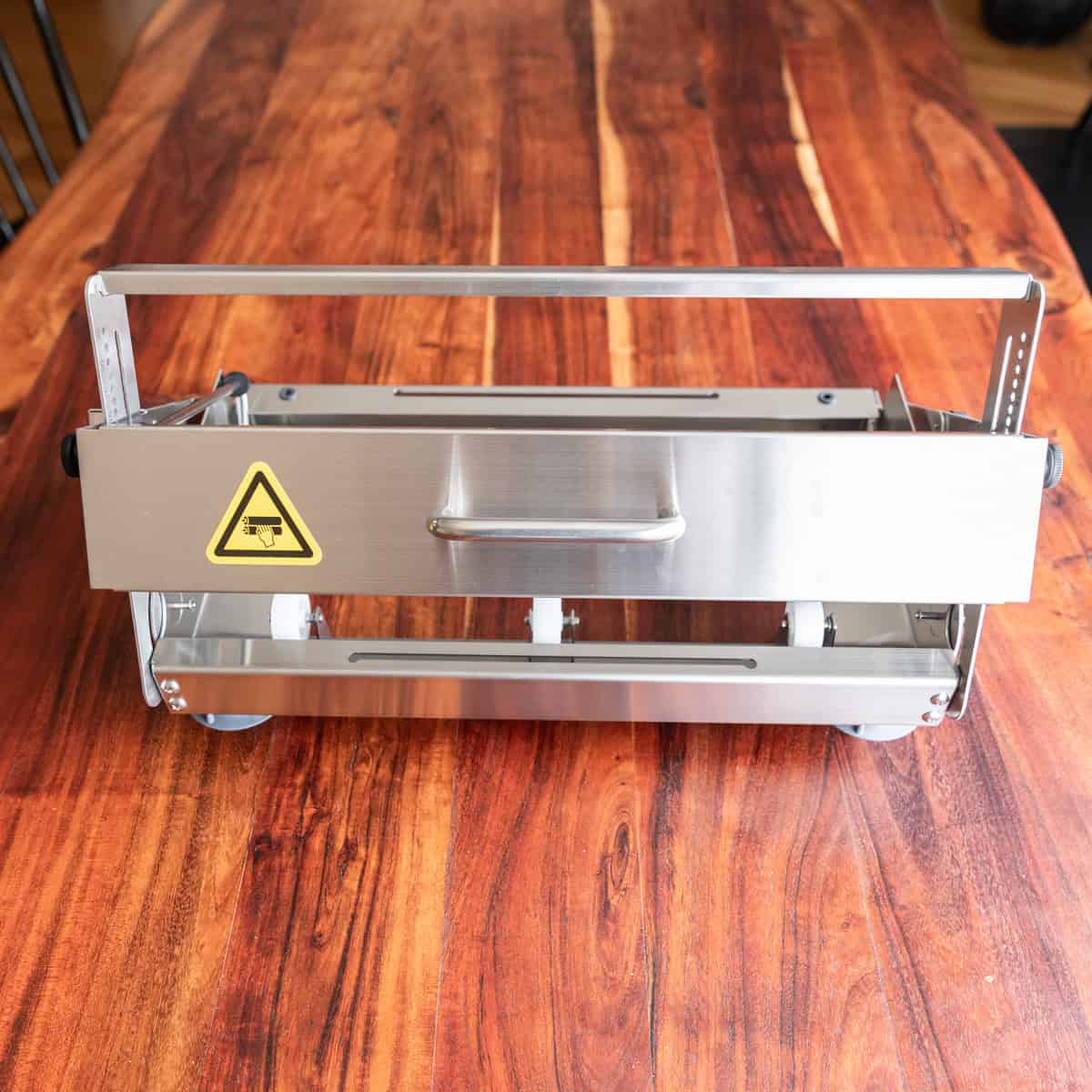
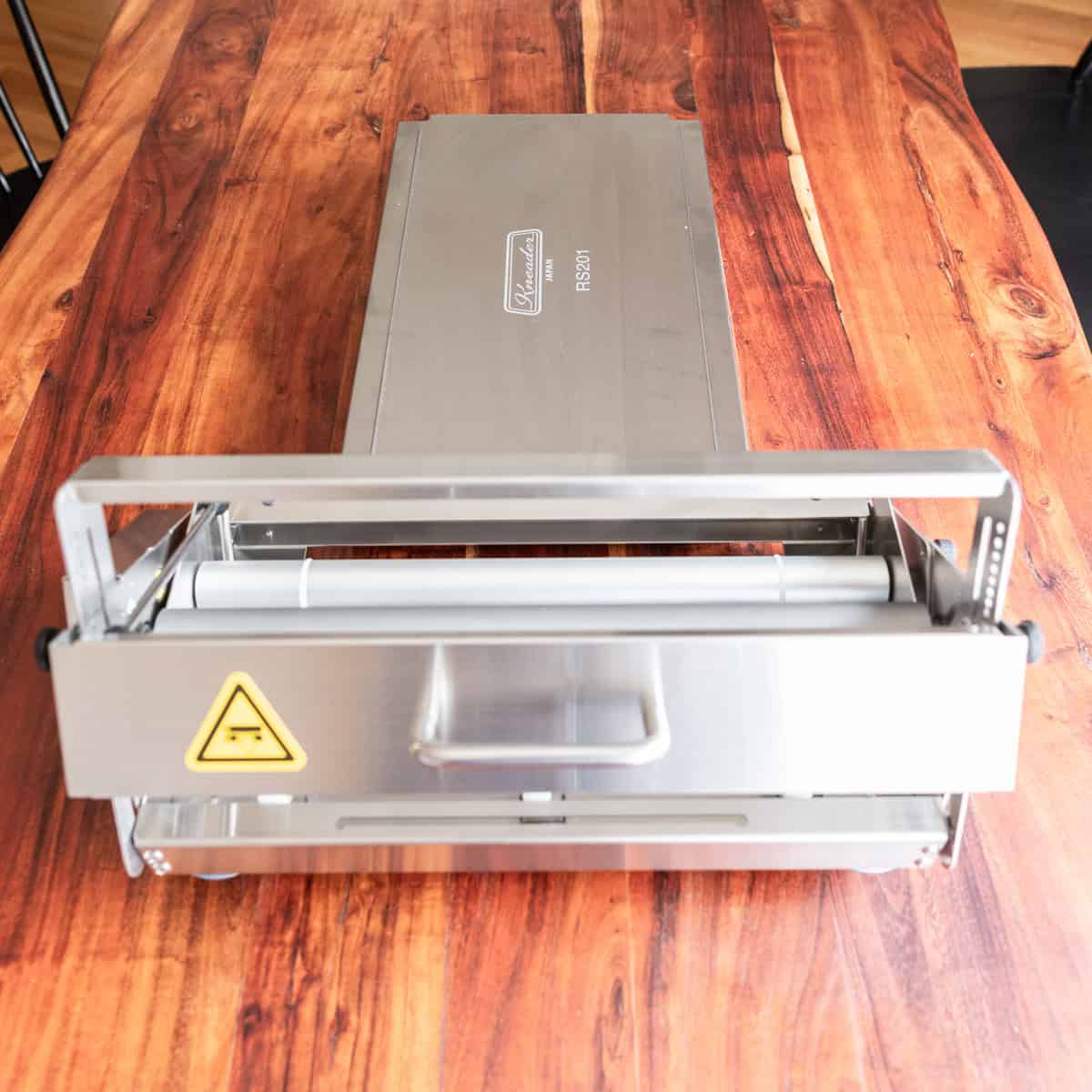
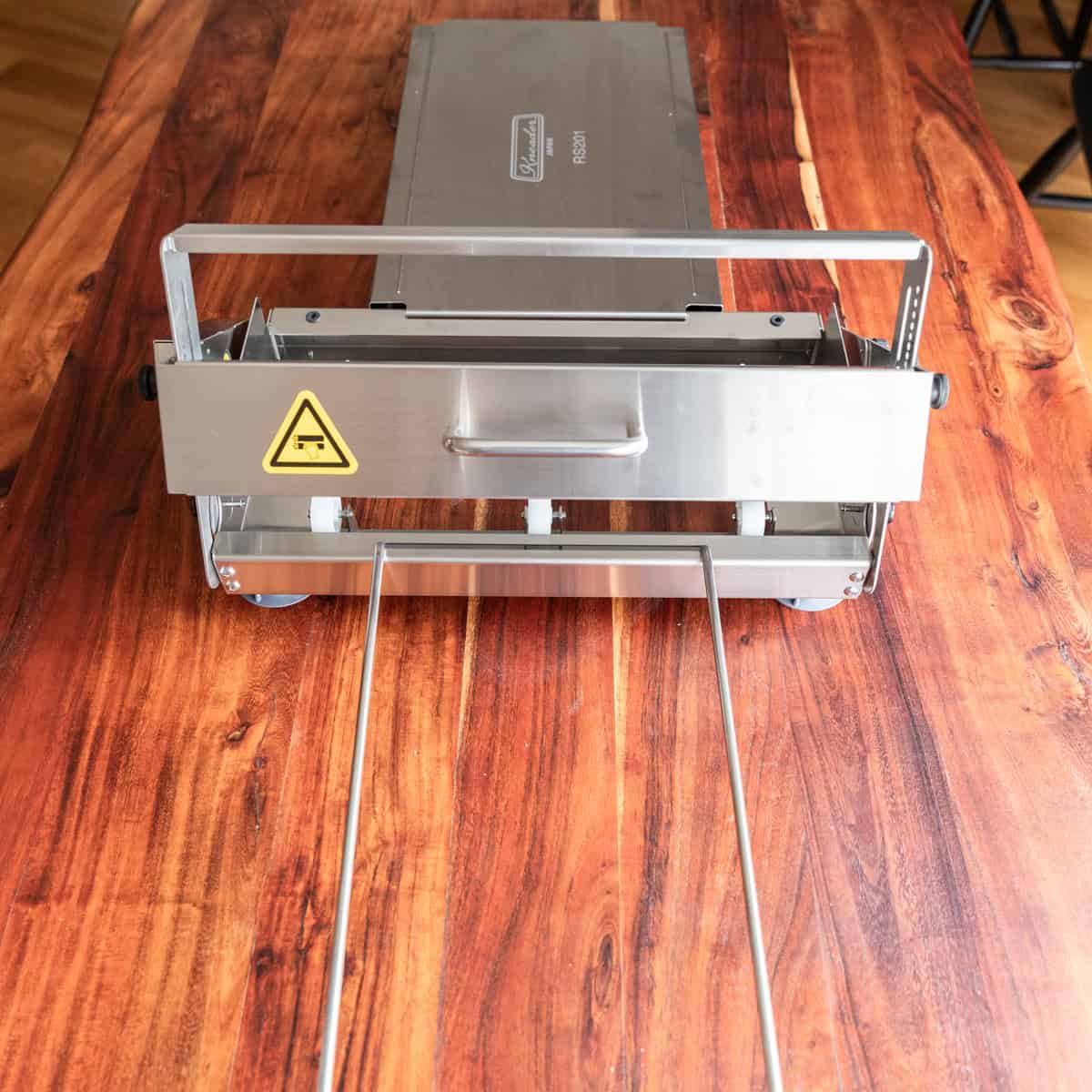
I made croissant dough for chocolate croissants and was very impressed by how smooth the dough sheeter was. I was expecting to have to put more pressure on the handle when the dough was going through, but it went through so easily I barely noticed a difference.
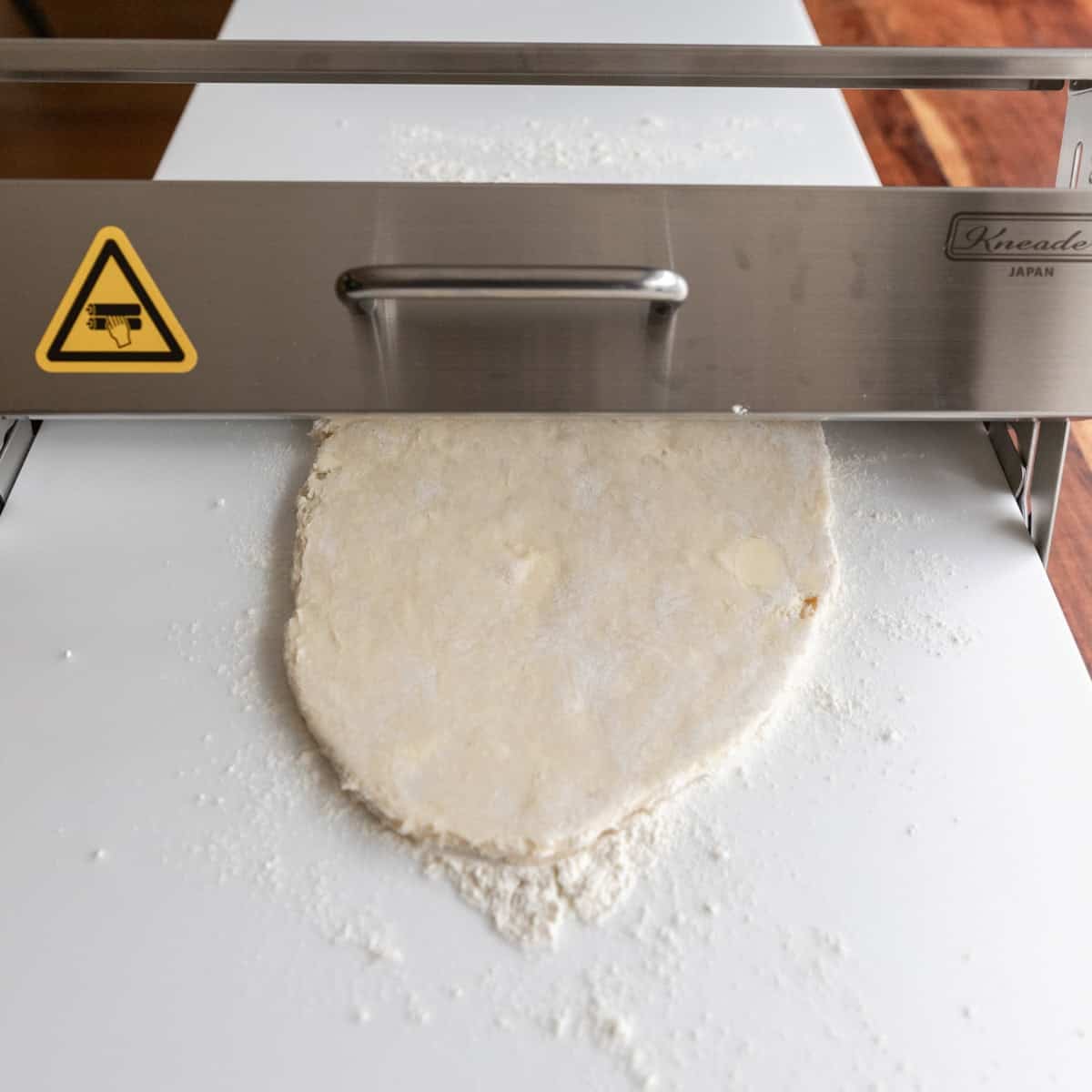
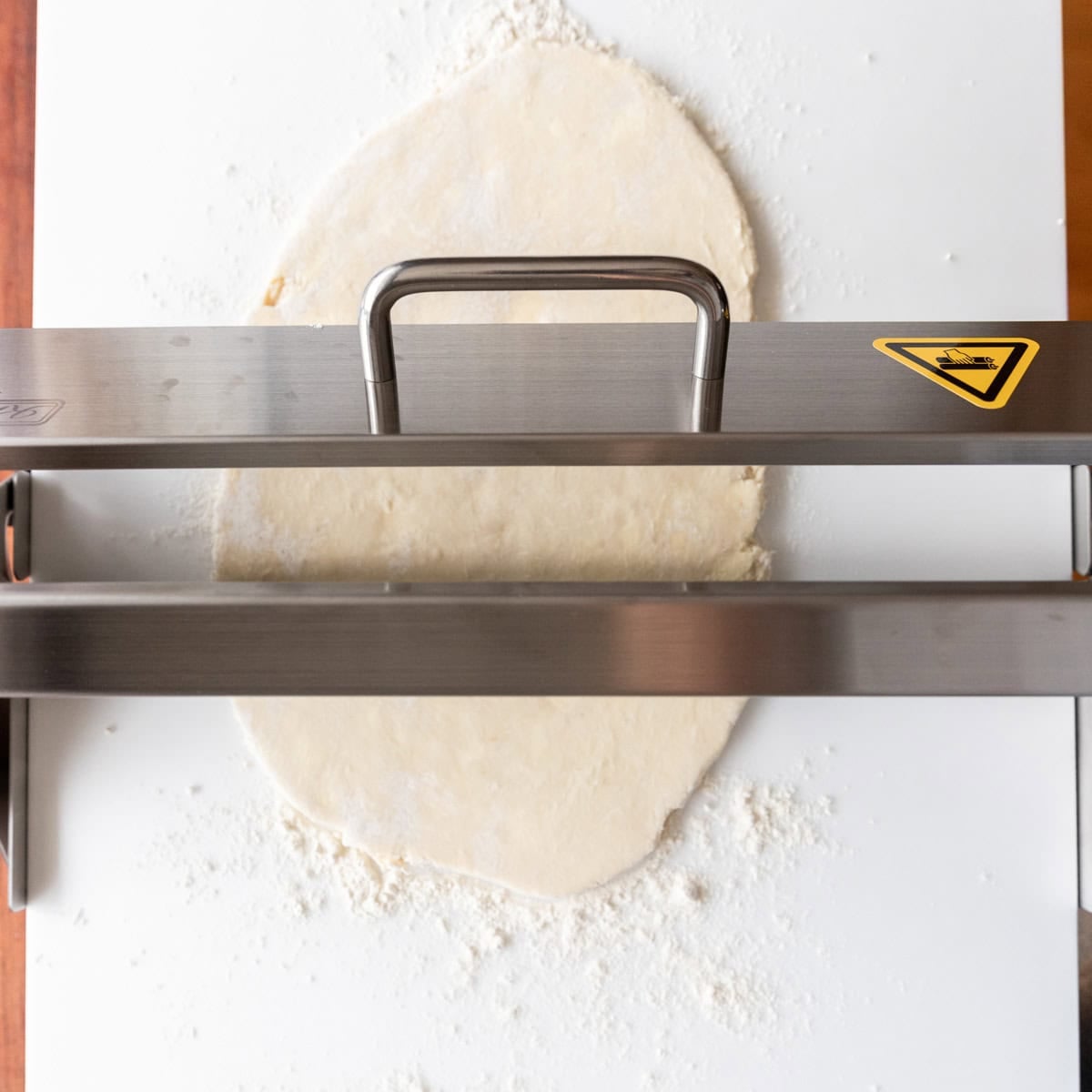
Adjusting the height of the roller was easy and the dough rolled out consistently each time. I didn't test the thinnest possible setting, but I am intrigued to play with it more on other types of dough and see the limits.
It most definitely saved me time and energy. If I were baking up a large batch of pastries I can see this being an enormous help in both areas.
What I like About the Japan Kneader Dough Sheeter
1. It helps create more even thickness
One of the hardest parts of laminated dough, or any rolled out dough really, is keeping your dough even as you roll. A dough sheeter helps take out some of that variation, which can mean cleaner, more consistent results.
2. It's compact compared to larger pastry equipment
Japan Kneader emphasized the foldable, space conscious design of its sheeters, especially the RS101 and RS201 models. That makes them more realistic for serious home bakers and small kitchens.
3. It's manual, simple, and doesn't require a huge setup
Because it is manually operated, you don't need to dedicate space around an electric commercial machine. There is no reliance on electrical power or needing to be near an outlet and there is no possibility of electronic failure. That simplicity can be a big advantage for bakers who want better results without a massive learning curve.
4. It works for more than just croissants.
I love tools that can do more than one job. Since this can be used for pastries, pie dough, tart dough, cookies, flatbreads, and pizza, it feels more versatile than a niche gadget you only pull out once a year.
Things to Consider Before Buying
No review feels complete without the "okay, but..." section and I wouldn't be being honest if I didn't give you a FULL review.
It's best for bakers who will actually use it
Do I think this is a must-have kitchen tool for every baker? No, I do not. Do I think someone who make a lot of rolled out doughs would benefit from owning one? Yes, I do.
If you only make croissants once every two years when you're feeling ambitious, you may save your money for something you'll get more use out of.
But if you regularly make laminated dough, pastry dough, or rolled dough recipes, a sheeter can save time, physical exertion, and help with consistency.
With that being said, I do think it is important to add that you may be one of those people who only makes croissants once every two years because of the inconvenience of doing so without a dough sheeter. Owning a dough sheeter, thus expending less time and effort, may just free you up enough to make croissants and other laminated doughs a more common part of your baking routine.
Model size matters
Japan Kneader offers different models with different recommended dough capacties. For example, their FAQ lists approximate maximum dough amounts per use ranging from 300 grams on the smaller RS101 setup up to 2,000 grams on the RS301, depending on the model and board combination.
So before buying, it's worth thinking about:
- how much dough you usually make at once
- how much space you have
- whether you're baking for home use or larger-scale production
It's still a specialty tool
This isn't like owning a whisk or a sheet pan. It's a specialty tool, so the value really depends on how often you work with doughs that benefit from sheeting.
Who I Think This Is Best For
I think a dough sheeter like this makes the most sense for:
- passionate home bakers who love rolled doughs.
- pastry-focused content creators
- cottage bakers or small-batch bakers
- bakers who want more consistency with laminated dough
- anyone who wants to reduce the physical effort of rolling dough by hand
If you're a very casual baker, it may be more tool than you need. But if pastry if your thing, I can absolutely see the appeal.
Is the Japan Kneader Dough Sheeter Worth It?
If you regularly make laminated dough or other rolled pastry dough, I think a dough sheeter can be a really valuable tool.
What makes the Japan Kneader sheeter especially interesting is that it seems to bridge the gap between a home kitchen tool and more serious pastry equipment. It's manual, compact, foldable, and designed specifically for bakers for who better consistency without needing a giant commercial machine.
For the right baker, that can be a game changer.
Final Thoughts
If you love making pastries from scratch and want to make the process smoother, faster, and more consistent, the Japan Kneader dough sheeter is definitely an interesting option to consider.
I think this is one of those tools that makes the most sense for bakers who know they'll use it often. For croissants, Danish pastries, puff pastry, pie dough, and other laminated or rolled doughs, have a dough sheeter can make the process feel much more approachable.
And honestly, anything that helps bring a little less stress and a little more confidence to pastry work gets my attention.
Leave a Reply